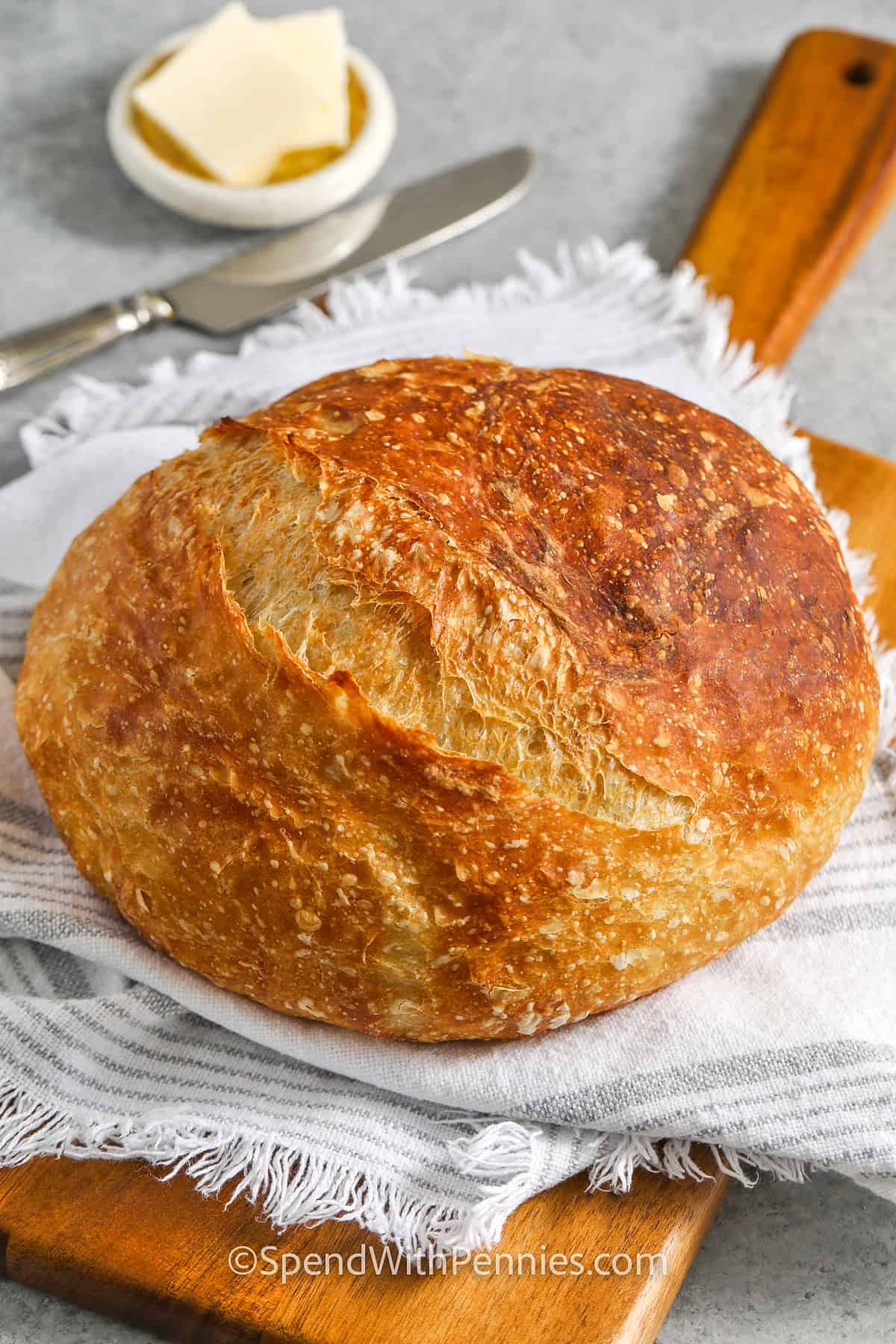
Imagine a world where you can bake a stunning, bakery-quality loaf of bread with just 5 minutes of active preparation. No intensive kneading, no complicated techniques, just simple ingredients and a little patience. Welcome to the revolution of no-knead bread! This incredibly popular no knead bread recipe has taken kitchens by storm, promising an irresistibly crisp crust, a delightfully airy interior, and a deep, complex flavor that belies its minimal effort.
If you've been hesitant to jump on the bread-baking bandwagon, or if you're a seasoned baker looking for an incredibly forgiving yet impressive technique, this is your sign. With our comprehensive guide, you'll discover how to create a magnificent loaf that tastes like it came straight from an artisan bakery, right in your own kitchen.
The Magic Behind No-Knead Bread: Science Meets Simplicity
Traditional yeast breads typically demand vigorous kneading. This process is crucial for developing gluten, the protein network responsible for giving bread its structure, elasticity, and ability to trap the gases produced by yeast, leading to a good rise. So, how does a no-knead bread recipe achieve such fantastic results without any kneading at all?
The secret lies in two key factors:
- High Hydration and Time: The dough for no-knead bread is exceptionally wet. In this highly hydrated environment, the gluten proteins float more freely and, given enough time, naturally align and form strong strands on their own. This self-structuring process, known as autolysis, is incredibly efficient. A long, slow rise—often 12 to 18 hours at room temperature—not only allows this gluten development to occur but also significantly enhances the flavor of the bread. The extended fermentation breaks down starches and creates complex organic acids, resulting in that coveted "bakery taste."
- The Power of the Dutch Oven: The second critical element for achieving that signature crispy, golden crust is baking in a preheated Dutch oven. When the wet dough is placed into a scorching hot pot and covered, the lid traps the steam released by the dough. This creates a highly humid micro-environment around the bread, which prevents the crust from forming too quickly. The moist heat allows the bread to expand fully, resulting in a thin, delicate crust that continues to crisp up as the bread bakes uncovered later. Furthermore, the thick walls of the Dutch oven conduct heat evenly and efficiently, acting like a miniature, super-hot oven that compresses and concentrates heat directly around your loaf, leading to superior browning and rise compared to baking on a regular baking sheet. To master this technique, delve deeper into The Dutch Oven Secret to Perfect No-Knead Artisan Bread.
Essential Ingredients for Your Artisan Loaf
One of the beauties of this easy bread recipe is its reliance on just a few basic ingredients. High-quality ingredients make a noticeable difference, so choose wisely!
The Best Flour for a Perfect Crusty Loaf
For a consistently excellent crusty bread, all-purpose flour or bread flour are your best bets. Bread flour, with its higher protein content (typically 12-14%), will yield a slightly chewier crumb and a more robust structure. All-purpose flour (10-12% protein) works beautifully too, producing a slightly lighter texture. Don't hesitate to experiment with other flours: you can substitute up to one cup of the white flour with whole wheat, spelt, or rye flour for added flavor and nutritional complexity. Just be aware that these flours absorb water differently, so you might need to slightly adjust the water content in future bakes.
Choosing the Right Yeast
Both instant yeast (also known as rapid-rise yeast) and active dry yeast will work for your no-knead bread recipe. I personally prefer instant yeast as it can be mixed directly with the dry ingredients without needing to be proofed first, streamlining the 5-minute prep even further. If you're using active dry yeast, you might prefer to proof it first by dissolving it in a small portion of the warm water with a pinch of sugar for 5-10 minutes until foamy, just to ensure it's still active. Always store your yeast in an airtight container in the refrigerator or freezer to prolong its shelf life; it can stay viable for a remarkably long time this way.
Sourdough Starter vs. Yeast: Your Ultimate Guide
If you're a sourdough enthusiast, you can absolutely adapt this no-knead bread recipe to use your active sourdough starter! The long fermentation of no-knead bread is perfectly suited to sourdough's natural leavening power. For a deeper dive into these options, consult Easy No-Knead Bread: Yeast or Sourdough, Your Ultimate Guide.
- Sourdough Starter + Yeast (Hybrid Loaf): If your starter is new, less robust, or you simply want a bit more "oomph" in your rise, a combination works wonders. Reduce the instant yeast in your recipe to about 1/4 teaspoon. In a liquid measuring cup, combine 1/4 cup (approximately 50g) of your active sourdough starter with enough room temperature water to reach 1 1/2 cups total. Stir this mixture into your dry ingredients.
- Sourdough Starter Only: For a true sourdough no-knead loaf, skip the commercial yeast entirely. Use 1 cup (approximately 200g) of a vigorous, fed sourdough starter. Combine it with 1 1/2 to 1 3/4 cups of room temperature water (adjust based on your starter's hydration and the desired dough consistency) and mix with your flour and salt. The bulk fermentation time might be slightly longer or shorter depending on your starter's activity and ambient temperature.
Crafting Your Perfect No-Knead Loaf: Step-by-Step
The beauty of this bakery-style bread is truly in its simplicity. Here’s a basic outline of the process:
- Mix the Dough (5 minutes!): In a large bowl, combine the flour, yeast (if using), and salt. Add the water (and sourdough starter if applicable). Stir with a wooden spoon or spatula until just combined. The dough will be very shaggy and sticky – resist the urge to knead! Cover the bowl tightly with plastic wrap.
- The Long, Slow Rise: Let the dough rest at room temperature (ideally 68-72°F / 20-22��C) for 12-18 hours. During this time, the gluten will develop, and the yeast will work its magic, building incredible flavor. You’ll notice the dough has significantly expanded and will be bubbly on the surface.
- Shape (Minimally): Lightly flour a clean work surface. Gently scrape the dough out of the bowl onto the floured surface. Fold the edges of the dough into the center a few times to create a loose ball. Avoid overworking it.
- Second Proof (Optional but Recommended): Place the dough seam-side up in a floured proofing basket (banneton) or a bowl lined with a floured towel. Cover and let it rest for another 30-60 minutes while your Dutch oven preheats. This helps the loaf hold its shape.
- Preheat Your Dutch Oven: Place your Dutch oven (with its lid) into your oven and preheat to 450°F (230°C) for at least 30 minutes, or even an hour. This step is crucial for achieving that superior crust.
- Bake to Perfection: Carefully remove the scorching hot Dutch oven from the oven. Gently invert the dough into the hot pot (it might sizzle!). Score the top of the dough with a sharp knife or razor blade if desired (a single slash or cross pattern). Cover the pot and bake for 30 minutes.
- Achieve the Golden Crust: Remove the lid and continue to bake for another 15-25 minutes, or until the crust is deeply golden brown and the internal temperature reaches 200-210°F (93-99°C).
- Cool Completely: Transfer the baked loaf to a wire rack and let it cool for at least 1-2 hours before slicing. This allows the internal structure to set and prevents a gummy crumb. Patience here is key!
Pro Tips for No-Knead Bread Success:
- Temperature Matters: Room temperature greatly affects rise time. In a warmer kitchen, the dough might be ready in 12 hours; in a cooler one, it could take closer to 18-20.
- Don't Over-Flour: When handling the dough, use just enough flour to prevent sticking. Too much extra flour can make your bread denser.
- Hydration Adjustment: If your dough feels too stiff (rare for this recipe) or too soupy, make tiny adjustments to the water next time. Factors like humidity and flour type can affect absorption.
- Storage: Store leftover bread at room temperature, cut-side down on a cutting board, or wrapped in a linen towel for a day or two. For longer storage, slice and freeze.
Flavor Variations and Creative Additions
While the classic no knead bread recipe is a masterpiece on its own, it also serves as a fantastic canvas for culinary creativity. Once you’ve mastered the basic loaf, consider these delicious variations:
- Herbed Delight: Add 1-2 tablespoons of fresh or dried herbs like rosemary, thyme, or oregano to the dry ingredients.
- Garlic & Cheese: Mix in a few cloves of minced garlic and 1/2 cup of shredded Parmesan or cheddar cheese for an incredibly savory loaf.
- Seeded Sensation: Incorporate 1/4 to 1/2 cup of mixed seeds (sunflower, pumpkin, flax, sesame) for added texture and nutrition.
- Olive & Feta: Fold in 1/2 cup of chopped olives and crumbled feta cheese for a Mediterranean twist.
- Sweet Touches: For a slightly sweeter bread, add a tablespoon of honey or maple syrup to the water and a handful of dried cranberries or raisins.
Conclusion: Your Bakery Awaits!
The journey of baking your first crusty no-knead bread is an incredibly rewarding one. With just 5 minutes of hands-on time, this no knead bread recipe offers a gateway to homemade artisan bread that rivals any bakery. It’s a testament to the power of simple ingredients, patient fermentation, and the magic of a hot Dutch oven. So, gather your ingredients, follow these steps, and prepare to impress yourself and everyone lucky enough to taste your magnificent creation. Happy baking!
